
What Is an Integrated Fire Pit?
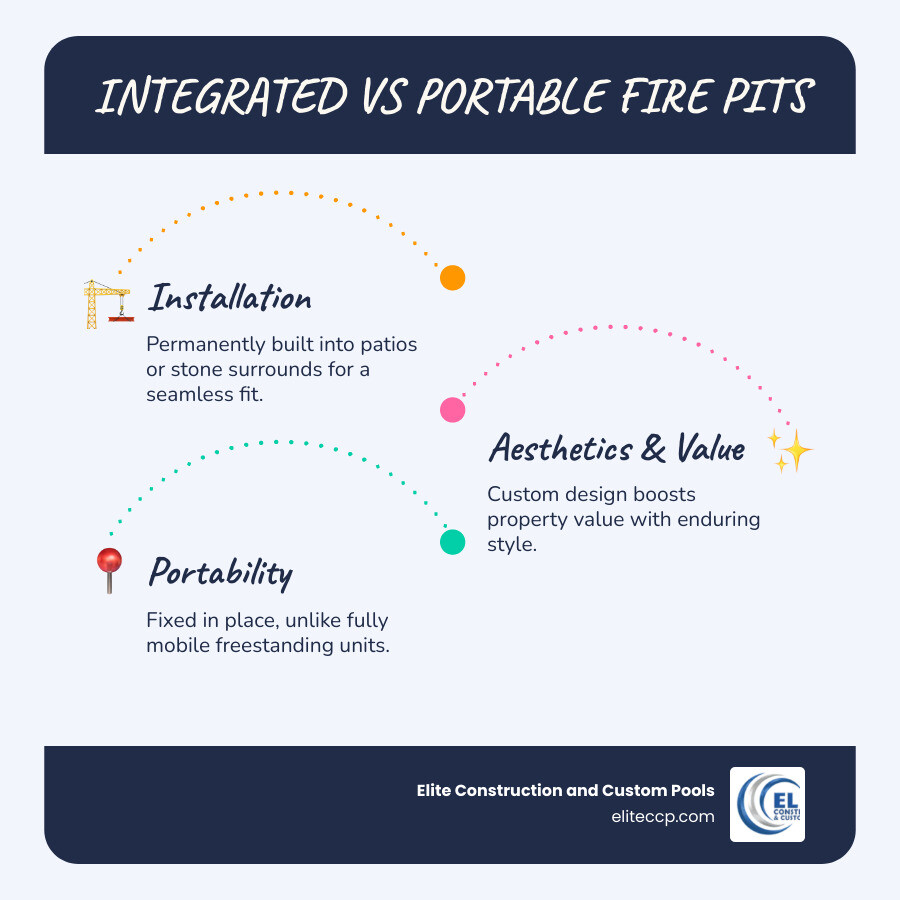
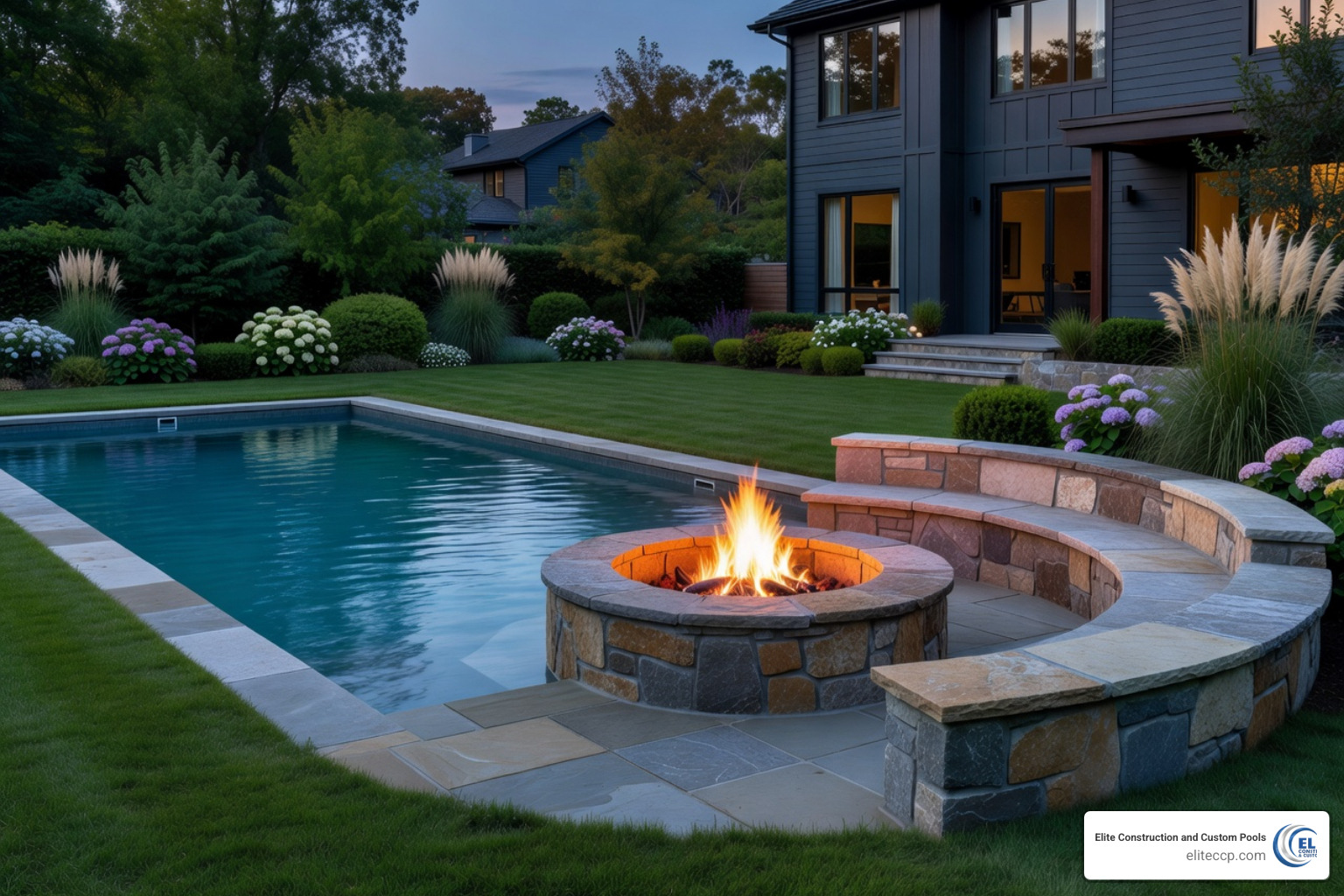
An integrated fire pit is a fire feature built permanently into your outdoor space — typically set into a stone surround, patio structure, or custom base — as opposed to a portable or freestanding unit you can move around.
Here’s a quick breakdown of what that means in practice:
| Feature | Integrated Fire Pit | Portable Fire Pit |
|---|---|---|
| Installation | Built into patio or stone surround | Freestanding, no installation |
| Fuel type | Wood, propane, or natural gas | Usually wood or propane |
| Aesthetics | Seamless, custom look | Standalone unit |
| Portability | Fixed (some models removable from insert) | Fully mobile |
| Value added | Increases property value | Minimal impact |
| Typical use | Permanent outdoor living feature | Camping, small patios |
Think of it as the difference between a built-in grill and a gas grill you wheel out of the garage. One is your backyard. The other is just sitting in it.
Integrated fire pits can run on wood, propane, or natural gas. They range from sleek gas fire tables to smokeless wood-burning bowl inserts set into hand-laid stone. Some are massive statement pieces. Others blend quietly into a patio edge.
The appeal is simple: a fire feature that looks like it belongs there.
For Texas homeowners especially, where outdoor living is practically a year-round lifestyle, a fire pit that enhances your patio’s design — rather than cluttering it — is a serious upgrade.
I’m Chris Koester, founder of Elite Construction & Custom Pools, and over the years designing and building luxury outdoor living spaces across Texas, I’ve integrated dozens of custom integrated fire pit features into pools, patios, and outdoor kitchens. That hands-on construction and design experience is what shapes everything you’ll read in this guide.
The Anatomy of a Modern Integrated Fire Pit
When we talk about the anatomy of an integrated fire pit, we are looking at a multi-layered structure designed for both beauty and endurance. Unlike a thin metal bowl you might find at a big-box store, these are engineered architectural elements.
A typical setup consists of the “vessel” or burner system and the “surround.” The surround is the permanent masonry or stone structure that anchors the unit to your patio. For many of our projects in Waller and Cypress, we use an insert ring. This ring acts as the mounting bracket, allowing a high-performance fire pit to sit flush within a stone opening.
The beauty of this design is the seamless integration. By using materials that match your existing pool coping or outdoor kitchen, the fire pit looks like a natural extension of the home’s architecture. Furthermore, many fire features today offer a dual-purpose design. For example, some rectangular models come with covers that transform the unit into a functional coffee table during the day, only to reveal a mesmerizing flame at night.
Benefits of an Integrated Fire Pit in Landscape Design
Why go through the effort of a permanent installation? It comes down to three things: aesthetics, property value, and technology.
- Aesthetics: A built-in unit eliminates messy hoses and mismatched metal legs. It allows for creative expressions, such as 9 Modern Pool Fire Bowls – Creative Designs That Wow! which can be placed along a pool’s edge to create a stunning “fire and water” effect.
- Property Value: Appraisers and buyers in markets like The Woodlands and Houston view permanent fire features as high-end capital improvements. It signals a finished, professional landscape.
- Smokeless Technology: Many modern integrated inserts utilize advanced airflow engineering. By pulling air through the bottom and venting it out the top of the inner wall, these units can “reburn” smoke before it ever reaches your guests’ eyes.
Safety Standards for Your Integrated Fire Pit
Safety isn’t the most “fun” part of design, but it’s the most important. An integrated fire pit must be installed with proper ventilation. If you are using gas, trapped air can be dangerous, so we always ensure the base has adequate air intake.
We also strictly follow clearance regulations. A fire pit should typically be at least 10 feet away from any combustible structures, including your house or low-hanging trees. In Texas, we also pay close attention to the surface—only non-combustible materials like concrete, stone, or specialized pavers should be used for the foundation.
Furthermore, users should be aware of California Proposition 65 warnings. Combustion byproducts, whether from wood or gas, contain chemicals known to cause health risks. Using high-quality fuels and maintaining proper airflow helps mitigate these risks, ensuring your backyard remains a healthy sanctuary.
Fueling the Flame: Wood-Burning vs. Gas Options
Choosing your fuel is the biggest decision you’ll make. It dictates the “vibe” of your evenings. Wood offers the crackle and nostalgic scent of a campfire, while gas offers the convenience of an “on/off” switch.
For those who want high heat without the hassle of a traditional bonfire, gas units are incredibly efficient. High-end gas fire pits can produce anywhere from 40,000 to over 180,000 BTUs. For instance, a 33-inch fire bowl might push out 83,000 BTUs, while a larger 39-inch model can reach a staggering 187,000 BTUs. These systems often feature electronic ignitions and flame adjustment knobs, giving you total control over the height and heat of the fire.
Smokeless Wood-Burning Technology
If you are a purist who loves real wood, you no longer have to suffer through a face full of smoke. Modern integrated fire pit inserts, like the Breeo X30, use “Secondary Combustion.”
Here is how it works:
- Step 1: Air is pulled in through the bottom (X Airflow technology).
- Step 2: The air travels up through a double-walled chamber where it is superheated.
- Step 3: This pressurized, hot oxygen exits through holes at the top of the rim and mixes with the smoke, causing it to burn a second time.
This results in a much hotter fire and significantly less ash and smoke. It’s a game-changer for hosting, as guests don’t have to keep playing “musical chairs” to avoid the smoke plume.
Hidden Propane Tank Systems
One of the main complaints about propane fire pits is the “ugly tank.” In a custom integrated fire pit, we solve this by building a custom base or using a fire table specifically designed to house the tank.
Typically, a fire pit must be at least 48 inches wide to accommodate a standard 20lb propane tank inside its base. If the fire pit is smaller, we often build a matching “tank end table” or run a gas line underground to a remote tank location. This keeps the hoses concealed and the aesthetic clean. For those looking for a dramatic flair, these hidden systems can even power “Scupper Woks”—combination fire and water bowls that spill into your pool while the flames dance on top.
Material Science: From Corten Steel to Sintered Stone
The materials you choose will determine if your fire pit looks better or worse in ten years. Because we build in the humid Texas climate—from the salty air near Houston to the heat of Waller—we prioritize materials that fight corrosion.
- Corten Steel: This is a “weathering steel.” It starts with a dark blue look but develops a beautiful, protective reddish-brown patina over time. It’s perfect for a rustic, modern aesthetic.
- Stainless Steel: The gold standard for durability. It won’t rust and maintains a sleek, polished look regardless of the weather.
- GFRC (Glass Fiber Reinforced Concrete): This is concrete on steroids. It’s lighter than traditional concrete but much stronger, making it ideal for large, integrated bowls.
- Sintered Stone (OuterStone®): A man-made material composed of natural stone. It is non-porous, antimicrobial, and nearly impossible to scratch, etch, or burn.
Choosing the Right Finish for Your Climate
In regions like Magnolia and Tomball, we deal with intense sun and occasional heavy rains. We recommend heat-resistant powder coatings or natural stone finishes that won’t fade or peel. For a truly custom look, many homeowners choose to wrap their integrated fire pit in the same stone or stucco used on their home’s exterior. This creates a “total design” feel that makes the fire pit look like it was part of the original blueprints.
Maintenance and Longevity
Maintenance for an integrated fire pit is surprisingly low. For wood-burning models, regular ash removal is key to maintaining airflow. For gas models, it’s mostly about keeping the burner ports clear of debris.
Most premium inserts come with impressive warranties—some up to 30 years for stainless steel components. To maximize the lifespan, we always recommend using a custom protective cover when the unit isn’t in use to keep out rain and nesting insects.
Installation Requirements and Professional Setup
Installing an integrated fire pit is not a weekend DIY project for the faint of heart. It involves heavy masonry, precise measurements, and often, gas plumbing.
The first step is ensuring the opening in your stone surround is the correct size. For a popular insert like the X30, you need an opening that is 34″ to 39″ wide and at least 15″ deep. Once the masonry is ready, the insert ring is centered, and the fire pit is lowered in. Because these units can weigh 90 to 250 lbs, this is always a two-person job.
Professional vs. DIY Integration
While you can buy a kit, professional installation ensures that your gas lines are leak-tested and your drainage is correct. There is nothing worse than a fire pit that turns into a birdbath every time it rains in Katy or Spring. Licensed technicians understand the local building codes and can ensure the unit is safely distanced from your home and property lines.
At Elite Construction & Custom Pools, we use 3D design software to show you exactly how the fire pit will look on your patio before we ever break ground. This helps in planning the perfect 10-foot clearance from structures and ensuring the gas line is plumbed efficiently.
Enhancing Functionality with Accessories
Once your integrated fire pit is installed, you can dress it up.
- Fire Glass & Ceramic Spheres: These replace traditional lava rocks. Fire glass offers a sparkling, modern look, while ceramic spheres help direct heat outward toward your guests rather than just straight up.
- Cooking Tools: Some integrated wood-burning pits are compatible with outpost grills or pizza ovens, turning your fire pit into a secondary outdoor kitchen.
- Weather-Resistant Furniture: Deep-seated chairs arranged in a circle around the pit turn it into a true “outdoor room.”
Frequently Asked Questions about Integrated Fire Pits
Can a propane tank be hidden inside an integrated fire pit?
Yes, provided the fire pit is large enough. Generally, a unit needs to be at least 48 inches wide or have a specifically designed tall base to house a 20lb propane tank. If the pit is smaller, a remote tank enclosure is the best aesthetic choice.
What is the required distance between a fire pit and a house?
For safety and to comply with most local codes in the Houston area, a fire pit should be at least 10 feet (about 3 meters) away from any structure, including your home, deck, or overhanging trees.
How do smokeless integrated fire pits actually work?
They use a double-walled design. Air enters through the bottom, heats up between the walls, and exits through holes at the top. This hot oxygen causes a “secondary combustion” that burns the smoke particles before they leave the pit.
Bringing the Whole Patio Together
Your patio shouldn’t just be a flat piece of concrete; it should be a destination. An integrated fire pit provides the warmth, light, and “wow factor” that transforms a lonely backyard into the neighborhood’s favorite gathering spot. Whether you prefer the rustic charm of a smokeless wood fire or the sleek convenience of a gas fire table, the key is professional integration.
At Elite Construction & Custom Pools, we specialize in bringing these visions to life with meticulous detail and premium materials. From Waller to The Woodlands, we help Texas homeowners create spaces they never want to leave.
Transform your backyard with custom fire features and let us help you design a space where memories are made around the glow of a perfect flame. Reach out to us today for a 3D design consultation and let’s give your patio the centerpiece it deserves.